
Insider activity at L3Harris Technologies is drawing increased attention, as several executives have reduced their holdings over the past year. While insider transactions represent only one aspect of investment analysis, a pattern of consistent selling can raise questions about internal sentiment.
Investors are monitoring these developments closely, weighing whether the activity reflects routine portfolio management or a more cautious view from within the company.
The latest data shows a notable level of insider selling, with no corresponding purchases recorded during the same period. The equity experts from Rubizio noted that while insider selling does not always indicate negative expectations, patterns of repeated sales without buying activity often warrant closer evaluation.
As investors assess the company’s outlook, insider behavior is becoming an important factor in shaping sentiment.
Insider Selling Activity Reaches Notable Levels
Over the past 12 months, insiders at L3Harris Technologies have sold approximately $7.3 million worth of shares, reflecting a meaningful reduction in internal ownership positions.
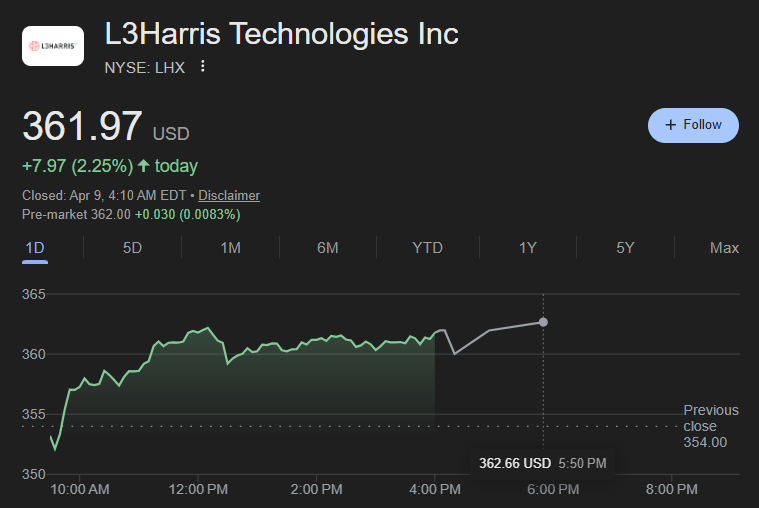
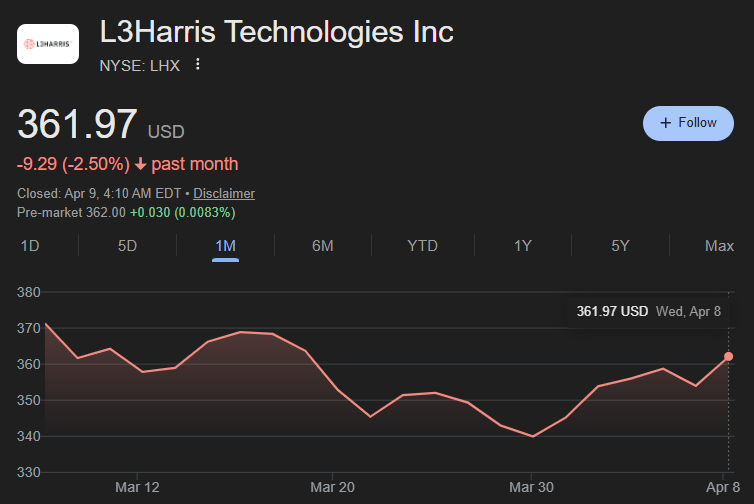
One of the largest individual transactions involved a sale of around $2.0 million, executed at a price close to $370 per share, which is near recent market levels of approximately $362.
Selling at prices close to current valuations may suggest that insiders view the stock as fairly valued, rather than significantly undervalued at this stage.
Lack Of Insider Buying Signals Caution
A key observation from the data is the absence of insider buying activity over the same period. While selling can occur for many reasons, including personal financial planning, diversification, or liquidity needs, the lack of purchases may indicate limited internal conviction at current price levels.
Investors often view insider buying as a stronger and more reliable signal, as it reflects direct confidence in future performance and valuation upside. Without such activity, market participants may adopt a more cautious and selective stance, particularly in uncertain conditions.
This imbalance between selling and buying is contributing to mixed sentiment around the stock’s near-term outlook, with investors closely monitoring whether this trend persists or begins to shift.
Recent Selling Activity Intensifies Focus
In the most recent three-month period, insider selling has accelerated, with approximately $6.8 million in shares sold. This concentrated activity has increased investor attention, particularly as it occurred without any offsetting purchases.
Short-term spikes in insider selling can sometimes reflect timing decisions or specific events, but they can also influence market perception, especially when combined with broader trends.
The recent activity reinforces the importance of monitoring ongoing insider behavior alongside financial performance.
Insider Ownership Remains A Positive Factor
Despite the recent selling, insiders still maintain a meaningful stake in the company. Current holdings are valued at approximately $220 million, representing around 0.3% of total shares outstanding.
This level of ownership suggests that management remains financially aligned with shareholder interests, which is generally viewed as a positive indicator.
Strong insider ownership can provide confidence that leadership is focused on long-term value creation, even during periods of share sales.
Investor Interpretation And Market Signal Strength
Insider transactions often serve as secondary indicators rather than primary decision drivers, but their influence on sentiment can be significant. When multiple insiders reduce positions without any buying activity, it can create a perception of reduced internal conviction, even if underlying fundamentals remain stable.
Markets tend to react not only to financial data but also to behavioral signals from leadership, which can shape short-term price movement. This makes insider trends particularly relevant during periods of uncertainty, where investors are looking for additional confirmation signals.
Understanding how to interpret these patterns within a broader context is essential for balanced and informed investment decision-making.
Company Performance And Growth Remain Key Drivers
Beyond insider activity, the company continues to generate profitability and operational growth, which remain central to its long-term outlook.
Financial performance, contract activity, and industry demand will ultimately play a larger role in determining future stock performance than insider transactions alone.
Investors are therefore evaluating both fundamental strength and internal behavior when assessing the company’s position.
The Road Ahead and What It Means for Investors
The recent pattern of insider selling introduces an element of caution, but it does not necessarily indicate a negative long-term outlook. Instead, it reinforces the importance of careful analysis, context, and balanced decision-making, especially when evaluating signals that can have multiple interpretations.
Going forward, investors will be closely watching for any changes in insider behavior, upcoming earnings performance, and broader market conditions. A shift toward insider buying or reduced selling activity could help strengthen confidence, while continued selling may maintain a more cautious and watchful market tone.
In addition, external factors such as industry demand, contract flow, and macroeconomic trends will continue to influence overall performance. Ultimately, the company’s ability to deliver consistent growth, strong financial results, and effective strategic execution will remain the most important driver in shaping its long-term trajectory and investor confidence.


