
Meta Platforms launched its most powerful artificial intelligence model yet, Muse Spark, representing the first major output from the restructured AI division. The tech giant spent $14.3 billion acquiring Scale AI and hiring its CEO, Alexandr Wang. This aggressive investment strategy aimed to close competitive gaps with rivals dominating the space.
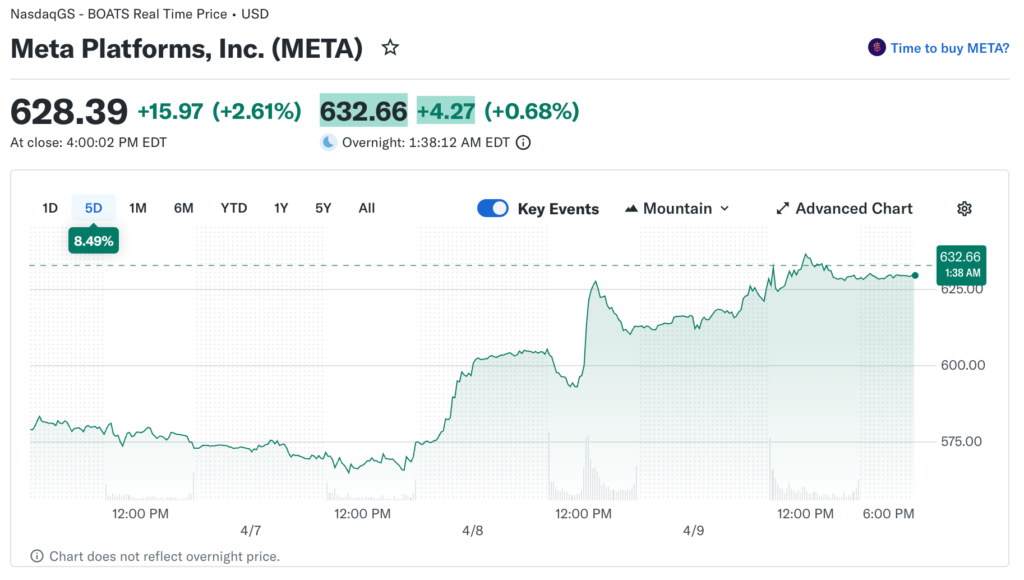
The company’s shares surged 6.5% following Wednesday’s announcement as markets rewarded a strategic pivot toward proprietary models. Senior financial analysts at Byronixel walk you through how the closed-source approach marked a departure from the previous open-source strategy. Meta previously released Llama models freely but faced disappointing adoption rates among developers seeking alternatives.
The Talent Acquisition Strategy
Meta assembled Meta Superintelligence Labs through aggressive recruiting from OpenAI, Anthropic, and Google competitors. Some engineers received compensation packages worth hundreds of millions to join the new division. The talent war reflected desperation to regain ground after the Llama 4 launch failed to meet expectations.
Wang’s leadership brought Scale AI expertise in data labeling and model training workflows. His track record of building data infrastructure for AI systems positioned him uniquely for the challenge. The acquisition represented a vertical integration strategy, securing critical capabilities rather than relying on vendors.
The Model Performance
Independent evaluations showed Muse Spark catching up with top models from market leaders in certain areas. Language understanding and visual perception benchmarks demonstrated competitive performance versus established alternatives. However, coding capabilities and abstract reasoning tests revealed gaps requiring further development.
The model tied for fourth place on a broad index of AI tests compiled by evaluation firms. This middle-of-pack positioning suggested progress but not breakthrough performance, justifying massive investments. Analysts questioned whether incremental improvements warranted the extraordinary spending levels observed across the industry.
The Strategic Pivot
Closed-source design prevented competitors from accessing Meta’s AI advances freely as previously occurred. The company stated hopes to open-source future versions but provided no timeline commitments. This flexibility preserved options while protecting near-term competitive advantages from proprietary developments.
Natively multimodal architecture integrated vision and language understanding from the ground up rather than stitching capabilities together. This design philosophy prioritized coherent reasoning across different input types simultaneously. The technical approach differentiated Muse from earlier models built by combining separate systems.
The Multi-Agent Innovation
Breakthrough capability involved deploying multiple model instances working in parallel on complex problems. Traditional approaches forced a single model to handle reading, planning, and tool usage sequentially. The parallel processing distributed workload enables faster problem-solving for difficult queries.
Meta claimed this multi-agent orchestration allowed spending compute more intelligently at runtime. Rather than making models bigger, extra processing power was deployed only when problems demanded it. This efficiency gain reduced costs while maintaining performance on challenging tasks.
The Health Focus
Over 1,000 physicians collaborated, curating training data enabling more factual and comprehensive medical responses. Health questions represented the top use case for AI assistants according to company research. The specialized training addressed liability concerns around providing inaccurate medical information to users.
Capabilities included analyzing images and charts to provide detailed health insights. The visual understanding, combined with a medical knowledge base, created a differentiated offering. However, disclaimers emphasized model cannot replace professional medical advice from licensed practitioners.
The Revenue Question
Capital expenditures for AI infrastructure are expected to reach $115 billion to $135 billion in 2026 alone. This nearly doubled the previous year’s spending, creating pressure to demonstrate returns. Investors demanded clear monetization pathways justifying extraordinary investment levels across the industry.
Shopping integration represented an initial revenue opportunity leveraging AI to drive e-commerce transactions. Meta planned to cite recommendations and content people share across Instagram, Facebook, and Threads. The social graph integration provided a unique advantage over competitors lacking similar network effects.
The Platform Rollout
Initial deployment through the Meta AI app and desktop website allowed controlled testing before broader release. Integration across Facebook, Instagram, WhatsApp, Messenger, and Ray-Ban glasses is planned for the coming weeks. This phased approach managed risk while building toward a comprehensive ecosystem presence.
Ray-Ban Meta AI glasses represented a hardware manifestation of an AI strategy, creating new usage scenarios. Wearable integration enabled hands-free assistance for real-world tasks beyond screen-based interactions. The form factor expansion demonstrated ambitions beyond traditional software applications.
The Strategic Stakes
The success or failure of Muse Spark would validate or question Meta’s AI spending trajectory. Investors are monitoring adoption metrics and revenue contribution from AI products closely. The multi-year bet required sustained execution across product, engineering, and business development.
Market capitalization gains following the announcement suggested optimism about competitive positioning improving. However, sustained stock performance depended on translating capabilities into profitable products. The gap between impressive demos and scalable businesses remained significant across the industry.


