
Recent developments in global energy markets are drawing close attention as geopolitical tensions shift rapidly. The latest ceasefire agreement involving Iran has introduced a sudden change in market dynamics, particularly in oil pricing, which had been elevated due to ongoing uncertainty.
The agreement, centered around safe passage through the Strait of Hormuz, has temporarily eased concerns surrounding global oil supply. Finance experts from Winseterra note that this route is responsible for nearly 20% of global oil flow, making it one of the most sensitive and strategically important energy corridors worldwide. Any disruption or reopening of this passage has immediate and significant effects on pricing.
In this context, the recent decline in oil prices reflects a broader shift in expectations, rather than just a short-term reaction. Market participants are now reassessing risk levels, supply stability, and near-term direction, all of which play a key role in price movement.
Ceasefire Triggers Immediate Market Reaction
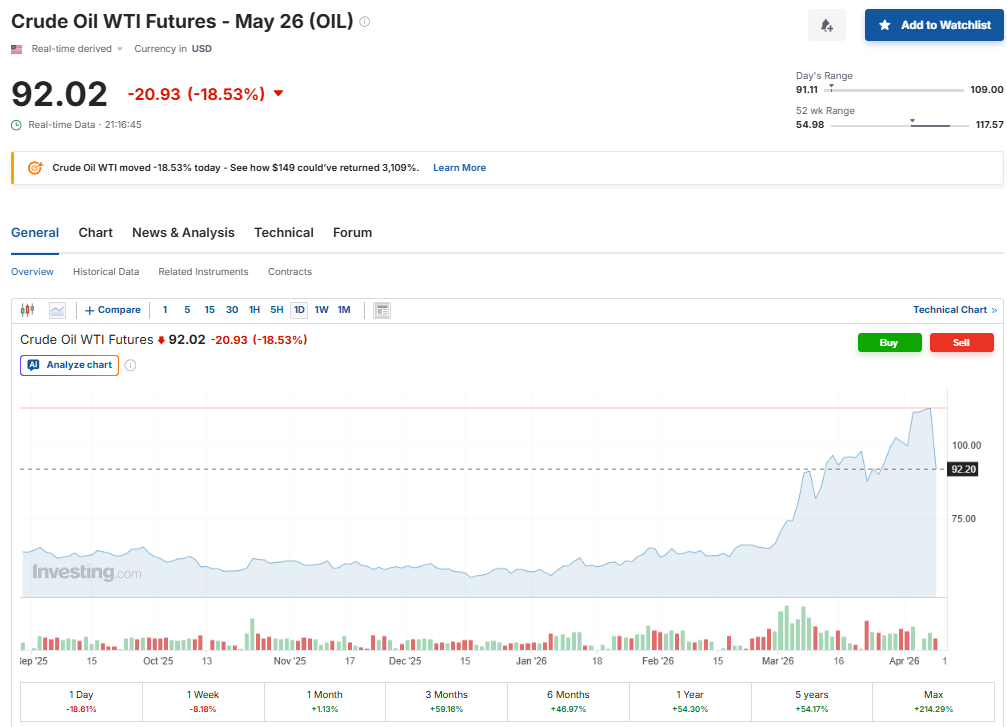
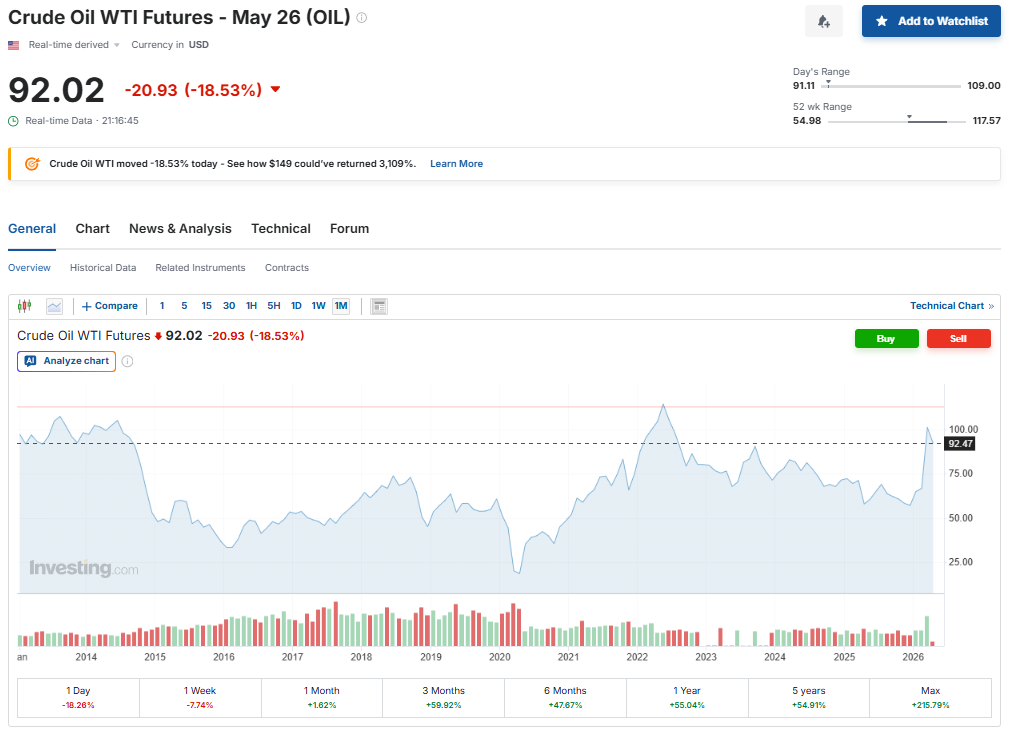
Oil markets responded quickly once the ceasefire was confirmed. U.S. West Texas Intermediate futures dropped approximately 18%, settling near $92.50 per barrel, while Brent crude futures declined by more than 16%, reaching around $91.25 per barrel. This marks one of the sharpest single-day corrections since April 2020.
The speed of the decline shows how rapidly markets adjust when supply risks are reduced. Much of the previous price increase had been driven by uncertainty and disruption fears, and once those concerns eased, prices corrected accordingly. This type of adjustment is often seen when markets move from a risk-driven environment into a more stable outlook, even if that stability is only temporary.
Strait Of Hormuz Remains A Key Global Pressure Point
The Strait of Hormuz continues to play a central role in global energy distribution. It connects major oil-producing regions in the Persian Gulf to international markets, making it a critical point for global supply chains.
Recent tensions had significantly reduced shipments due to attacks on commercial vessels, contributing to what was described as the largest supply disruption in modern history. This pushed fuel prices higher across global markets, impacting both businesses and consumers.
With the ceasefire allowing safe passage, confidence in supply flows has improved, which directly influenced the recent drop in oil prices. The restoration of even partial movement through the route has helped reduce immediate pressure on global supply chains.
Market Sentiment Shifts Rapidly
The recent price movement highlights a clear shift in sentiment. Before the ceasefire, markets were heavily positioned for continued disruption, which kept prices elevated.
Once the agreement was announced, traders quickly adjusted their positions. This resulted in a decline exceeding 15% in a single session, reflecting how strongly expectations influence short-term price action.
Such movements demonstrate how quickly market sentiment can change, especially when new developments alter the broader outlook. Rapid shifts like this are common in energy markets where geopolitical factors play a major role.
Global Energy Outlook Remains Uncertain
Despite the price drop, uncertainty remains a key factor. The ceasefire is expected to last for two weeks, leaving markets cautious about what comes next.
If supply flows remain stable, prices may continue to stabilize. However, any renewed tension could quickly reverse the current trend and push prices higher again. This creates a situation where traders must balance optimism with caution.
This balance between temporary stability and underlying risk continues to shape the overall outlook for oil markets. External developments remain the primary driver of price direction in the near term.
Short Term Outlook Requires Close Monitoring
The next 48 to 72 hours will be critical in determining market direction. Traders are watching shipping activity and real-time developments closely to assess whether the situation continues to improve.
While the recent decline offers some relief, volatility is still expected to persist. Markets remain highly sensitive to new information, and conditions can change quickly. Even minor updates can lead to noticeable price reactions.
Conclusion
The sharp drop in oil prices highlights the strong connection between geopolitical developments and market behavior. Even temporary changes in supply expectations can lead to significant price movements.
Although the ceasefire has reduced immediate concerns, the situation remains fluid. Staying informed, cautious, and responsive will be essential as markets continue to react to evolving conditions.
Market participants are also paying closer attention to broader macroeconomic signals that may influence oil demand alongside supply developments. Factors such as global growth expectations, industrial activity, and currency fluctuations can all contribute to how oil prices behave in the near term. Even with improved supply conditions, weaker demand outlooks could further pressure prices.
On the other hand, stronger economic indicators may support stabilization despite lingering risks. This interaction between supply recovery and demand uncertainty continues to shape market sentiment, making it important for traders to evaluate both sides of the equation before making decisions in a rapidly changing environment.


