
The EUR/USD currency pair has moved sharply higher, reflecting a shift in global sentiment as geopolitical tensions temporarily ease. The recent upward movement highlights how quickly currency markets can react to changes in risk perception and macroeconomic expectations.
The euro strengthened against the US dollar as uncertainty surrounding geopolitical developments began to soften, reducing demand for traditional safe-haven assets. Finance experts from Rubizio noted that the move reflects a combination of easing risk conditions and shifting expectations around inflation and monetary policy.
As markets digest both geopolitical developments and economic signals, the currency pair is entering a phase of heightened sensitivity to incoming data and global events.
EUR/USD Reaches Multi Week High
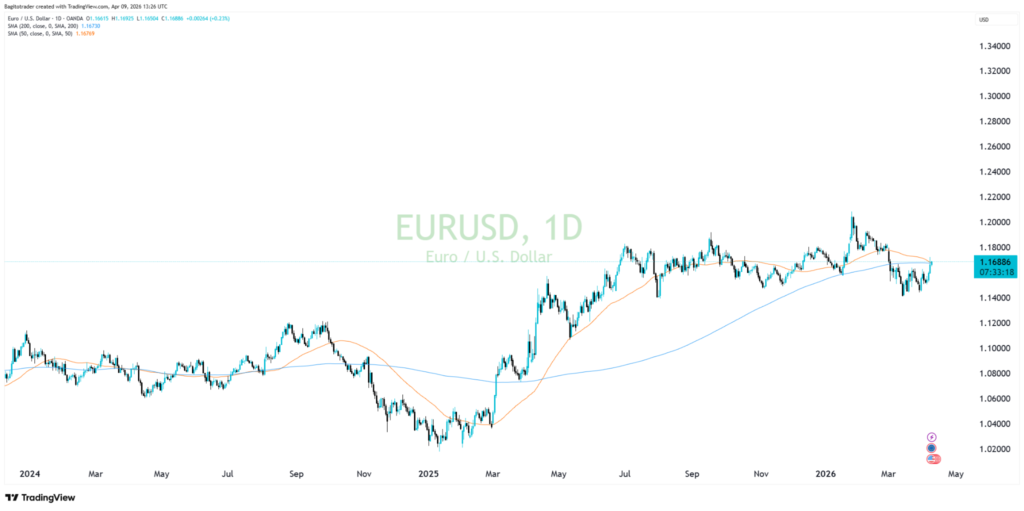
The pair climbed to approximately 1.1675, marking a four-week high and signaling renewed strength in the euro. This upward movement was driven largely by weakness in the US dollar, rather than a fundamental shift in eurozone data.
The dollar came under pressure as investors adjusted positions in response to reduced geopolitical risk, leading to a broader decline in safe-haven demand.
This shift allowed the euro to gain ground, supported by improving sentiment across global markets.
Ceasefire Developments Shift Market Sentiment
A temporary pause in geopolitical tensions has played a central role in the currency’s movement, acting as a key catalyst for recent shifts in global markets. The easing of immediate risks has encouraged investors to move away from defensive assets and safe-haven positions, reallocating capital toward higher-risk currencies and growth-oriented instruments.
Reports of ongoing discussions and a potential framework for further negotiations have contributed to improving market confidence, even as underlying uncertainty remains. This cautious optimism is helping stabilize sentiment while reducing demand for traditionally stronger defensive currencies.
As a result, this shift in sentiment has been a major driver behind the recent decline in the US dollar and the corresponding upward movement in EUR/USD, reflecting a broader repositioning across global currency markets.
Inflation Expectations Add To Dollar Pressure
In addition to geopolitical factors, rising inflation expectations in the United States are playing an increasingly important role in shaping currency dynamics. Increased costs, particularly in areas such as transportation, logistics, and supply chain operations, are contributing to concerns about persistent and potentially prolonged price pressures.
These developments are influencing expectations around future monetary policy decisions, as central banks must balance inflation control with economic growth. Any shift in policy direction can have a direct impact on currency valuation and investor positioning.
As inflation expectations continue to rise, markets are actively reassessing the potential path of interest rates, adding another layer of complexity and uncertainty to the outlook for the US dollar.
Key Economic Data In Focus
Investor attention is now turning toward upcoming economic releases, which are expected to provide critical insights into inflation trends and economic performance.
The release of Consumer Price Index (CPI) data is particularly important, as it will help clarify the extent of price pressures in the current environment.
These data points could play a significant role in shaping short-term market direction, influencing both currency movements and broader financial markets.
Currency Market Volatility And Short Term Positioning
Currency markets are currently experiencing elevated sensitivity to both geopolitical headlines and economic data releases, leading to increased short-term volatility. Traders are adjusting positions more frequently as new information emerges, creating rapid shifts in price action. This environment favors short-term strategies and tactical positioning, rather than long-term directional commitments. Institutional participants are likely managing exposure carefully, balancing risk while waiting for clearer signals. As a result, currency movements may remain unpredictable in the near term, with sharp reactions to news developments continuing to drive fluctuations across major currency pairs.
Technical Outlook Suggests Near Term Consolidation
From a technical perspective, EUR/USD is currently trading near key resistance levels around 1.1700, where price action is beginning to consolidate.
Short-term projections suggest a possible pullback toward 1.1566, followed by a potential move higher toward 1.1717 or above, depending on market conditions.
Momentum indicators point to a mixed but slightly bullish bias, with upward pressure still present despite the potential for short-term corrections.
This technical setup indicates that the pair may continue to trade within a defined range before establishing a clearer directional trend.
The Bigger Picture Behind Market Trends
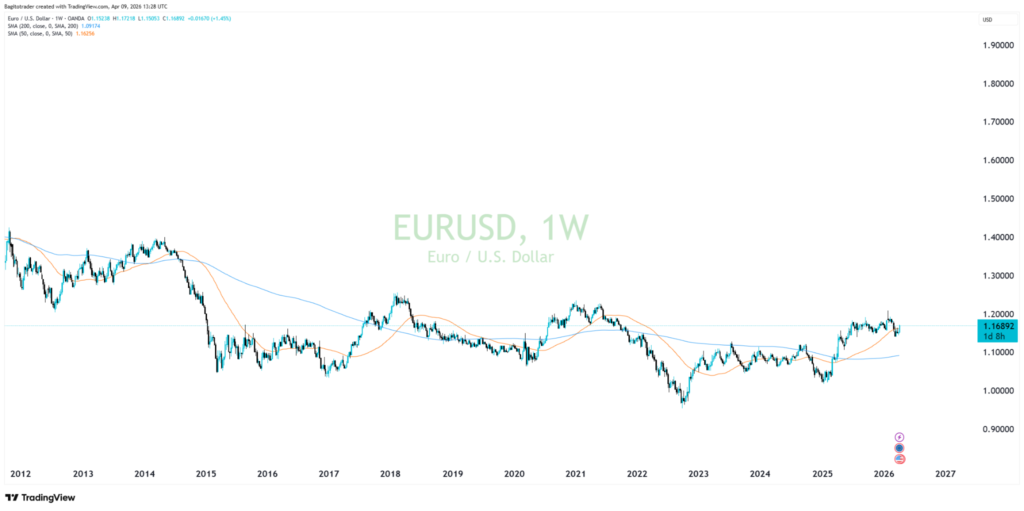
The direction of EUR/USD will depend on a combination of geopolitical developments, inflation data, and monetary policy expectations. If current conditions persist, the euro may continue to benefit from reduced demand for safe-haven assets.
However, stronger US economic data or renewed uncertainty could shift momentum back toward the dollar.
Overall, the currency pair remains highly responsive to both global events and economic indicators, with near-term movements likely to be driven by incoming data and evolving market sentiment.


